Veteran Of Massive Change In FX Market Technology: Gerry Gohler

PROFILE

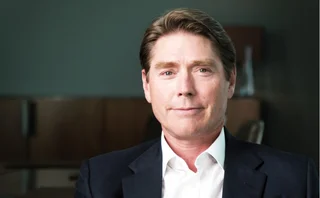
Gerry Gohler is one of a kind. As a 50-year veteran of the foreign exchange markets he has seen the market change from tested telexes to computers that move hundreds of millions of dollars around the world in milliseconds. Michael Halls reports.

How has technology changed since you started?

When I first started in 1950 all we had on our desks by the phone were hand-cranked calculators and you had to hand write your tickets, so the change to today’s markets is extraordinary.

I suppose people would say that we lived in, say, a horse and buggy age compared to nowadays. And, of course in 50 years’ time people will be saying the same about today’s technology.

One difference about having poorer technology was that you had to be mentally alert all the time, though I suppose in the end there isn’t much difference in the trading mentality.

In those days we all had to calculate our P&L by hand, so it was frequently a work of art getting the sums to work out right.

Arbitrage plays in those days were a frantic rush; not just to make the calculations but to make sure that you got them right. The same numbers that could make you a tidy profit could also make you a loss if you didn’t make the right calculations.

In fact I was probably the first trader in New York in the 1950s, to get a personal calculator. It cost $100 – quite a pile in those days – but it paid for itself.

What was odd during that period is that for quite some time many traders got hammered by their counterparts in London and New York who were provided with some of the new calculators. By the time we were calculating the price they had already taken the trade.

But don’t get me wrong, I’m not against technology. I’ve got a nice computer at home and I love to spend hours on the internet reading little-known provincial newspapers and the like.

What do you think is the major change between today’s markets and those when you started?

In one word: relationships. Until recently the foreign exchange business was all based on relationships. So, for example, if I suddenly found myself with say a DM50 million position that I had to unload in a hurry, my first reaction would be to call up another trader, who’d be a personal friend – even though he worked at a rival bank.

In those days you’d know exactly who you were dealing with, his wife’s name and those of his kids, even that of his pet dog! But it was a relationship business. In many ways I’ve always believed that personal relationships are more important than professional ones.

(And that too has also been the way I treated my staff. I’d back them up to the hilt if they had had, say, some trades go against them but, of course, not if they had exceeded their trading limits.)

Nowadays our brave new electronic trading world is losing that. So, for example, young traders may be doing vast amounts of business but not have a clue about the person at the end of the phone or screen.

It’s a shame that this business has got more and more impersonal over the years.

And, of course, we’re at a new threshold of trading as it starts to become even more automated and what was essentially a people business becomes one between machines.

And the secret for successful trading?

Quite simply it’s knowing when to cut your losses. I’ve seen savvy traders who when sinking into the quicksand cut their losses and get out.

I’ve also seen those where the sand is up to their nose and they can’t get out. And then, of course, there are those who exceed their limits and, well, once that happens that’s it.Me, I’d never gamble my last dollar.

How do you think banks’ top management regard their forex trading operations?

For the last 25 years at least bank management has always been unsure about how traders do what they do – or even what they do.

So mostly what they feel is one of fascination. Perhaps nervous fascination is a better term, as they are aware of a trader’s ability to make – or lose – large amounts of money.

There’s also quite often a large amount of cowardice to be seen.

I remember one occasion when I had to get rid of £200 million – a huge amount in those days – from a central bank early in the morning. By around three or four in the afternoon I was down around $300,000 to $400,000 for the bank, at which point the executive above me pretended he didn’t know and went home.

But I persevered and by early evening I’d turned it round and by 11pm I was actually some $250,000 up. When I closed my positions at two in the morning – and I’d been working for almost a day by then – I was up even more.

The odd thing was that the executive who had slid out and didn’t want to know exactly how down I was in the afternoon came in, went straight to the chairman and claimed credit for it for himself. Others, completely separate from my trades, also tried to take credit for it.

For that I would offer one piece of advice to traders in similar positions: when you’re in trouble make sure that it’s not the person above you who knows about your position, but the person above that.

And success?

Well the old rule of the markets – if you make a heap of money you walk on water – still applies.

And one aspect of being a foreign exchange trader is that you lead such a wonderful life. There is a real community feeling about the industry. You can walk into conferences around the world and you’ll know both people from that country and many others.

That’s part of the great thing about the ACI which still continues to feel like a big family.

You must remember that when the ACI first started it was set up solely as a social club – a way for people to connect and develop friendships.

And, as you develop your friendships, you also develop a professional support base for other times.

Only users who have a paid subscription or are part of a corporate subscription are able to print or copy content.

To access these options, along with all other subscription benefits, please contact info@fx-markets.com or view our subscription options here: https://subscriptions.fx-markets.com

You are currently unable to copy this content. Please contact info@fx-markets.com to find out more.

Most read articles loading...

You need to sign in to use this feature. If you don’t have a FX Markets account, please register for a trial.

Sign in
You are currently on corporate access.

To use this feature you will need an individual account. If you have one already please sign in.

Sign in.

Alternatively you can request an indvidual account here: