

Emerging Markets Survey Pinpoints FX & NDFs As Dominating Trading
BROKERS

LONDON--FX and non-deliverable forwards are the two most commonly traded products in the emerging markets, according to a survey released by Prebon Yamane at Forex '98 in Geneva. The study also found that average deal sizes are getting smaller, with 77 per cent of respondents saying transactions are typically under $5 million.
The study, Prebon's second annual survey, was conducted between December 1997 and January 1998, and was compiled from telephone interviews with 180 traders at a variety of commercial and investment banks across Latin America, Central Europe and Asia. Respondents were asked to provide details of their current trading activity by country, asset class and product, as well as the size and frequency of dealing. The study covers a range of financial products--including FX, equity, bond and interest rate trading.
A total of 39 per cent of respondents said they were involved in FX--the largest asset class in the survey. However, that figure was down slightly from the 43 per cent last year. Overall, spot and non-deliverable forwards (NDFs) were the two most commonly traded products, followed at a distance by government paper and cash equities. Currency options were the fifth most popular contract type traded.
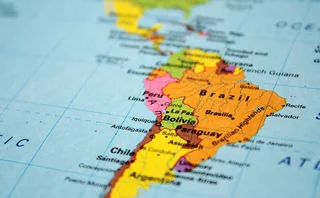
The survey displayed considerable regional variation. In Latin America, interest in FX products grew from 31 per cent of trading activity last year to 43 per cent this year. The report claims that much of this increase is explained by growing popularity of forward FX transactions. NDFs were found to be the most commonly traded contracts, at 17 per cent, while interest in spot FX and currency options was lower than last year. But even within Latin America the picture was mixed.
Traders within Central Europe expressed differing sentiment as well. Although FX accounted for 42 per cent of trading by asset class, respondents noted much greater activity in Poland and Hungary, for example, than elsewhere. Polish NDFs were found to be the most popular currency product in the region, accounting for 20 per cent of activity, followed by Russian and Hungarian NDFs and Polish zloty spot contracts.
The survey puts the interest in NDFs down to a number of factors, including their advantage as an off-balance sheet instrument and a tool to deal with credit risk. The growing number of counterparties and the reduced amount of documentation and government red tape involved in trading NDFs are also factors enhancing their popularity.
Following the economic upheaval in the region last year, it is perhaps not surprising that Asian emerging markets registered the greatest change over the past year. The survey found that FX accounts for 39 per cent of volume traded in all asset classes, up from 31 per cent the previous year. Spot FX contracts are the most commonly traded FX products across most of the region, followed by NDFs and options.
Meanwhile, the dismal investor sentiment in Asia has been reflected by a nosedive in equities trading. The number of respondents who said they were involved in broking stocks and shares slipped dramatically in the region, from 41 per cent last year to just 6 per cent in the latest survey.
The turbulent economic atmosphere in emerging markets across the globe also made a clear impact on the patterns of trading. Extreme volatility has meant traders are dealing larger numbers of smaller deals. The 77 per cent of respondents who said ticket sizes are below $5 million contrast with 53 per cent last year. Meanwhile, just 1 per cent of deals are in the $11-20 million range, down from 12 per cent last year. Limiting single-party exposures was cited as the most likely reason for this change.
Another trend that contrasts with the results of last year's survey is the perception of risk. Convertibility risk is now seen as the key problem in emerging markets, displacing sovereign risk by a small margin. Turmoil in the currency markets caused many countries previously committed to freeing up their currencies, to slow down reforms in order to guard against speculative attacks, says Prebon.
Brazil, Russia, Mexico and China all top the list as areas of continuing interest to investors. Poland is also of significant interest due to its size and relative sophistication. Israel, Kenya and Zimbabwe were pinpointed as areas where investors are looking for future liquidity.
Looking ahead, 58 per cent of respondents expect trading activity in the emerging markets to increase this year, while 27 per cent expect it to remain stable and 15 per cent anticipate a decrease. The report notes that the enthusiastic 58 per cent is a surprisingly high number, given current economic conditions, but attributes the optimism to growing interest from the fund management industry.
In an effort to raise returns, fund managers have begun to include investments in emerging markets as part of their mainstream investment policies, says Prebon. This inflow of money should continue despite recent regional instability, and so long as it does, activity in these markets will increase.
--Robin Pagnamenta
Only users who have a paid subscription or are part of a corporate subscription are able to print or copy content.
To access these options, along with all other subscription benefits, please contact info@fx-markets.com or view our subscription options here: https://subscriptions.fx-markets.com
You are currently unable to print this content. Please contact info@fx-markets.com to find out more.
You are currently unable to copy this content. Please contact info@fx-markets.com to find out more.
Copyright Infopro Digital Limited. All rights reserved.
As outlined in our terms and conditions, https://www.infopro-digital.com/terms-and-conditions/subscriptions/ (point 2.4), printing is limited to a single copy.
If you would like to purchase additional rights please email info@fx-markets.com
Copyright Infopro Digital Limited. All rights reserved.
You may share this content using our article tools. As outlined in our terms and conditions, https://www.infopro-digital.com/terms-and-conditions/subscriptions/ (clause 2.4), an Authorised User may only make one copy of the materials for their own personal use. You must also comply with the restrictions in clause 2.5.
If you would like to purchase additional rights please email info@fx-markets.com
More on Investment
First Ibor versus SOFR cross-currency swaps trades
Westpac and Citi strike BBSW/SOFR trade in landmark moment for Australian market

LatAm investors urged to watch FX exposure
Fitch Ratings says currency volatility increases risk for infrastructure projects
Emerging market central banks drive gold demand with reserve diversification
Mexico leads the way in reserve diversification in the first quarter
Eurozone crisis is a 'bomb about to explode', says Neil Record
The founder and chairman of Record Currency Management believes the euro has been mortally wounded and will struggle to survive in its current form

Spotlight on: Neil Record, Record Currency Management
The founder and chair of Record Currency Management talks to Robert Mackenzie Smith about the growth of the firm over the past three decades, as well as the challenges posed by the financial crisis and his shortlisted entry for the Wolfson Economics Prize

LTRO has jump-started currency investors out of risk aversion, says Pimco
Currency investors appear to have moved away from risk aversion and become more interested in high-yielding EM currencies as a result of the ECB’s refinancing operation, according to Pimco’s head of FX

FX markets driven excessively by 'headline noise', says Aviva’s currency chief
Volatility in foreign exchange markets has been driven increasingly by a desire to re-price on the back of every headline, says Pierre Lequeux, head of currency management at Aviva Investors

Spotlight on: Collin Crownover, SSgA
State Street Global Advisors’ head of currency management talks to Joel Clark about investor appetite for G-10 and emerging market currencies, and how his global team has managed the volatility and political uncertainty that has characterised the foreign…
