CFDs gain reprieve from CVA threat
Earlier this year, a number of retail FX brokers were lining up to prophesy doom for the contracts-for-difference (CFD) market. Basel III had placed the instrument square in the sights of the credit valuation adjustment (CVA) charge, a new rule requiring an extra wedge of capital to be added to derivatives providers’ balance sheets. Retail FX brokers would be forced to scale down provision of CFDs, or forced out of the market entirely due to this higher capital cost, they claimed.
Just a few months later, these doom-mongers now look a little like Chicken Little. New analysis has shown the sky isn’t going to fall in on CFDs. In fact, the instrument seems to have gained a reprieve from any ill-effects of the CVA charge.
“It turns out the CVA charge is likely to have very little impact on required capital for CFD trading firms,” says Brendan Callan, chief executive for FXCM Europe in London. “A lot of people, including ourselves, thought the calculations involved would spit out a big, scary number for new capital requirements; we now expect the addition to be an insignificant increase from our existing capital requirement.”
Other market participants agree. “After reviewing the CVA charge extensively, we feel its negative impact has been somewhat oversold when it comes to the CFD market,” says David Jones, chief market strategist at IG in London. Retail FX trading provider Oanda also believes the threat has been overstated, and reaffirmed its commitment to the CFD market. Saxobank, CMC Markets and CityIndex declined to comment.
The CVA charge requires sell-side participants to hold back extra capital for potential losses associated with the deterioration in a counterparty’s creditworthiness when dealing non-centrally cleared derivatives. In the European Union (EU), it will be introduced in 2014 as part of the fourth capital requirements directive (CRD IV), which transposes the Basel III standards into EU law. Trades with corporates are exempt from the charge, but all other uncleared buy-side deals will be affected. The charge can be calculated through a standard or advanced calculation method, though the latter is expected to be reserved for the largest and most sophisticated investment banks.
FXCM’s Callan says CFDs have been saved by a clause in the CVA mitigation rules. As long as brokers offset their CFD trades with other cleared trades, the charge is significantly reduced. “CFD trades between a broker and its clients are out of scope of the CVA charge. The broker’s offsetting positions are also out of scope given that those offsetting trades end up with a CCP. Brokers tend to offset clients’ CFD positions through exchange-traded futures, which are then cleared by the exchange itself. Brokers may need to adjust their offsetting strategy a bit, but the CVA charge on CFDs can essentially be reduced to zero.”
Callan actually admits he is disappointed by the minimal impact expected from the CVA charge. “Initially, we thought it could potentially start shutting down the smaller players that are barely meeting capital requirements as is. Firms of our size would have survived the uplift from the CVA charge, but the broker market would have been rationalised down to a smaller number of participants. In our opinion, the initial capital required to offer highly leveraged trading is too low in Europe. I was hoping the CVA would have had a bigger impact.”
Despite this apparent reprieve, some larger CFD providers are taking a step back. In late August this year, Royal Bank of Scotland advised customers of its ‘marketindex’ CFD service to close any positions before November 8, when all unexecuted orders will be closed by the bank.
“As part of our exit from structured retail investor products and equity derivatives, we have decided to close RBS marketindex, an electronic CFD trading service for professional retail investors. We duly notified affected clients on August 27 that we would close this service on November 8, after which date RBS will return all funds left in their trading accounts,” said a spokesperson for RBS.
Despite this departure, the overall retail FX market looks strong and has been growing in presence throughout 2013. According to recent estimates released by Boston-based research firm AiteGroup, daily retail FX volume stood at around $280 billion per day in 2012, will rise to $380 billion by the end of this year and $579 billion by 2017.
Only users who have a paid subscription or are part of a corporate subscription are able to print or copy content.
To access these options, along with all other subscription benefits, please contact info@fx-markets.com or view our subscription options here: https://subscriptions.fx-markets.com
You are currently unable to print this content. Please contact info@fx-markets.com to find out more.
You are currently unable to copy this content. Please contact info@fx-markets.com to find out more.
Copyright Infopro Digital Limited. All rights reserved.
As outlined in our terms and conditions, https://www.infopro-digital.com/terms-and-conditions/subscriptions/ (point 2.4), printing is limited to a single copy.
If you would like to purchase additional rights please email info@fx-markets.com
Copyright Infopro Digital Limited. All rights reserved.
You may share this content using our article tools. As outlined in our terms and conditions, https://www.infopro-digital.com/terms-and-conditions/subscriptions/ (clause 2.4), an Authorised User may only make one copy of the materials for their own personal use. You must also comply with the restrictions in clause 2.5.
If you would like to purchase additional rights please email info@fx-markets.com
More on Foreign Exchange
Average reported daily UK FX turnover hits record high
Daily turnover of $2,881bn in October 2019, up 2% from previous high of $2,821bn in April

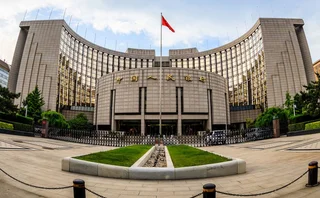
PBoC injects 1.2 trillion yuan as markets plunge
Chinese central bank eases to support economy as coronavirus spreads; Q1 GDP growth could drop to 4%
Spot volumes on platforms resumed downward trend in 2019
But an uptick was seen in FX swaps and forwards submitted for settlement

PBoC extends market closure as coronavirus spreads rapidly
Chinese central bank extends interbank markets closure and vows to maintain ample liquidity