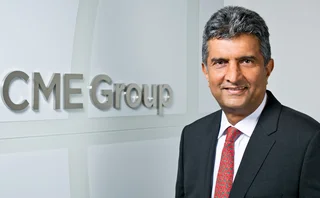
Spotlight on: Nigel Khakoo, Nomura
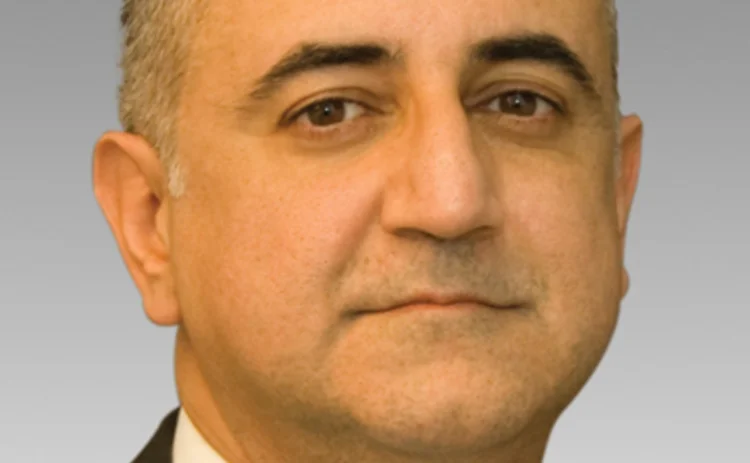
Nigel Khakoo at Nomura

When Nigel Khakoo left Citi in mid-2011, following the bank's decision to merge its G-10 and emerging markets options businesses into a single unit, it didn't take long for Nomura to snap up the foreign exchange options veteran. After 21 interviews across three continents, Khakoo joined the Japanese bank in November as global head of FX options and co-head of FX trading for Europe, the Middle East and Africa, sharing the co-head role with Charlie Lovett-Turner.

Khakoo has joined Nomura at a time of transition for the bank's FX business, following two key changes last year: the integration of FX and rates into a single business, global macro products, headed by Steve Ashley; and the subsequent departure of Richard Gladwin from his role as global head of FX. In some ways, it was the transitional nature of the business that encouraged Khakoo to take up the role.

"The thing that attracted me to Nomura is that its FX business still has a lot of room to grow and we have an opportunity to define our own strategy. Nomura has a unique position in the market as an Asian bank, and has something different to offer. The senior management within the FX group has done a great job of building the business. The focus for everyone is to keep up the momentum," says Khakoo.

At Citi, Khakoo was global head of G-10 options trading, having first joined the bank in 2006. Prior to that, he had worked at Merrill Lynch for two years and JP Morgan for 12 years. In his new role at Nomura, Khakoo is based in London and reports to Steve Ashley.

FX Week: What is Nomura's current strategy in FX?
Nigel Khakoo (NK): As an Asian investment bank, we have a different view of the market to our competitors. That can be seen across a number of areas, whether you are looking at flows in AUD/USD, USD/JPY or emerging Asia. In addition to that, our research platform is extremely strong, and we invest a lot of time and resources in this area. We have a fairly unique proposition in terms of seeing flows in and out of Asia. Our goal is to make sure we maximise the opportunities that exist internally, and in building the brand externally. Clearly we also have a competitive advantage in Japan, which continues to have the biggest savings base globally. Rates in Japan have been zero for the past 20 years, so there is a desire among investors for yield and outperformance. We see a strong level of interest in some emerging market currencies as a result. There are a lot of potential sources of currency flows from Japan, whether that's through savings, the retail sector, or mergers and acquisitions.

FX Week: What are your priorities for 2012?
NK: The main objectives are to continue to grow our product offering and build out our capabilities, while focusing on our core strengths. We are a relatively young business and there are lots of opportunities internally to capture core business by delivering products efficiently. To allow us to do that, we have to make sure the lines of communication between geographies and product areas are open and functioning properly.

FX Week: What have been the benefits of the recent integration of FX and rates into a single business?
NK: If you look at the correlation between the two asset classes, sometimes rates leads FX and sometimes FX leads rates. An example is the impact the European Central Bank's long-term refinancing operation has had on the rates market and flows in the bond markets, which have been drivers of FX movements. Asset markets are more correlated now than they have ever been.

FX Week: Do Nomura's sales and trading teams now cover both asset classes?
NK: It's not a case of integrating everything, but rather to realise synergies between the two businesses where they do exist. The basic idea is to bring both parts of the business together to get a handle on the key drivers of activity, and make sure there is good dialogue between the two, especially when it comes to serving the same clients. At the same time, we have retained the specialism and knowledge in both asset classes in order to sell products and serve clients effectively. We still have a specialist FX sales force, for example.

FX Week: What have been the biggest changes in the FX market in recent years?
NK: One of the biggest changes has been the accumulation of reserves, particularly among central banks and sovereign wealth funds. We have seen China's reserves grow massively in the past 20 years, and central banks and sovereign wealth funds have become more active players in the FX market. Liquidity has evolved as well – the spot market has seen incredible changes in the past 10 years, including a big move to electronic platforms. I never imagined I'd talk to a spot trader about latency issues or co-locating servers next to EBS. Also, if you look at cash volumes, there are a greater number of small players injecting liquidity, as well as all the arbitrage players trying to make a pip or two out of the market. Volumes in the cash market have increased enormously, and yet ticket sizes have gone down – that gives an indication of the activity from the smaller players. In the options market, however, it is going in the other direction. The number of banks willing to warehouse risk and work with clients on large tickets has decreased. Ten years ago, you could call 30 people in the direct market to get a price on eurodollar – now that number is much smaller.

FX Week: How are options markets pricing in the volatility that has resulted from the ongoing crisis in the eurozone?
NK: The options market is a little more relaxed than it has been previously. We have seen a risk rally over the past month or so when emerging market assets were becoming stronger. In EUR/USD, vols are trading at the bottom end of the range, close to the lows we saw at the beginning of last year. Similarly, the skew in eurodollar, which measures how much to the downside options are bid over the top-side options, is also close to the lows.

FX Week: Do you think this is the right view for the markets to take?
NK: Clearly we have seen some decisions taken to find a solution for Greece, but the economic conditions for Europe as a whole remain challenging. On that basis, there is still a strong possibility the euro will go lower. There is discussion around the euro being used as a funding currency or carry trade with such low rates. You can buy options to protect yourself in the event of a crisis, but it is likely the euro will go down on the back of recessionary pressures. It is going to be a struggle to achieve austerity and growth simultaneously.

FX Week: On regulation, are you concerned about the effect that likely requirements for mandatory clearing and exchange trading of FX options might have on demand for the product?
NK: We will have to see how the regulation pans out in terms of execution and what needs to go on an exchange. Current exchange-traded contracts are limited in terms of strikes and maturity, so liquidity is far less than is available in the over-the-counter market. That has improved lately, but to hedge in any kind of longer-dated capacity or large size remains challenging. It is important for us to work with all parties in the FX market to figure out how we can continue to deliver the best liquidity to our customer base.

FX Week: Under new regulations, trades will have to be reported to a central repository, and some of that data may be disseminated publicly. Are you concerned that public reporting might make it harder to transact in large size?
NK: Liquidity in the options market is extremely good. Customers can get very tight prices on very large tickets. I don't know what the end solution would look like, but whatever shape or form it takes, it is important that it will not cost the end-user any more to hedge than it does already. When Lehman Brothers filed for bankruptcy, I was involved in the process of trying to find out what our exposures were at Citi, as well as talking to the Federal Reserve about the next steps. The FX market resolved those issues pretty quickly without any disruption to the service. Obviously volatility went up immediately afterwards, but we are now back to vol levels and spreads that are as tight as they were before that event. It is imperative that regulatory change does not adversely affect the price of liquidity.

FX Week: What keeps you awake at night?
NK: The regulatory environment is the elephant in the room – we have an obligation to work with the regulators and our customer base to make sure they get what they need. That will continue to be on everybody's radar. There has also been a migration of talent from the sell side to the buy side, which has been interesting from a risk-taking perspective. As for any FX manager, retaining and developing talent is critically important, but fundamentally, the challenge is what it always has been: making sure we effectively deliver product to clients while managing the business over both the top and bottom lines.

Only users who have a paid subscription or are part of a corporate subscription are able to print or copy content.

To access these options, along with all other subscription benefits, please contact info@fx-markets.com or view our subscription options here: https://subscriptions.fx-markets.com

You are currently unable to copy this content. Please contact info@fx-markets.com to find out more.

Most read articles loading...

You need to sign in to use this feature. If you don’t have a FX Markets account, please register for a trial.

Sign in
You are currently on corporate access.

To use this feature you will need an individual account. If you have one already please sign in.

Sign in.

Alternatively you can request an indvidual account here: