Kx Systems: ‘fill or kill year’ for Global Code adoption
We need systems that can verify whether a firm is in compliance with acceptable market standards, says Richard Kiel
More than a year and a half since the official launch of the FX Global Code of Conduct in May 2017, a central repository of market participants who have publicly committed to the principles had little more than 600 entries as of December 2018. Only a handful of them are from the buy side.
Adherence to the Code will, once again, come into the spotlight in 2019, as the authors of the document and currency participants place greater focus on its adoption.
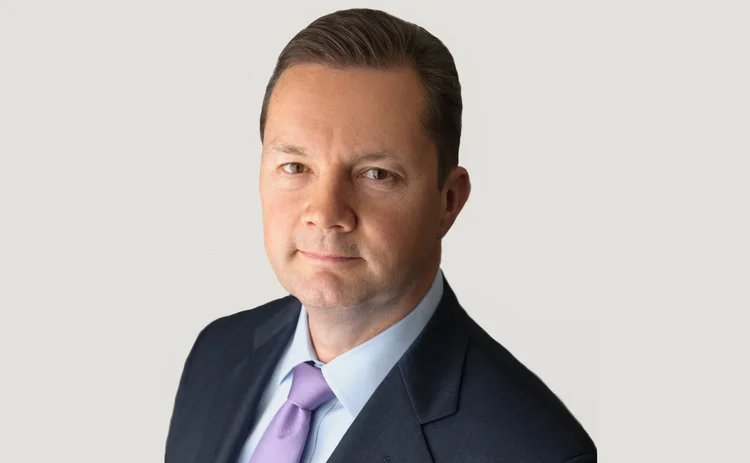
But that momentum will need to be backed up by systems that can verify whether a firm is in compliance with acceptable market standards, says Richard Kiel, global head of FX solutions at Kx Systems. This year, it is about making surveillance systems even better at catching would-be bad guys.
“I think there is a growing concern from people on the buy side that maybe things just really haven’t changed. As a technology provider, what we feel strongly about is that principles are extremely important, but in terms of being able to surveil the behaviour of market participants, principles are not enough,” Kiel says.
“You need to balance principles with a sophisticated monitoring platform. Complementing somebody saying ‘I’m a good person and I’m going to do the right thing’ with fact-based evidence to demonstrate they actually are will go a lot further towards restoring the trust between buy and sell side.”
In 2018, Kx Systems saw an uptick in interest across asset classes from businesses as a whole – rather than just compliance units – wanting to take on more surveillance responsibility. John Conneely, head of surveillance at the firm, says businesses are now viewing surveillance as their first line of defence.
One of the most critical points that I think the FX industry is faced with right now is the acquittal of the FX Cartel members
Richard Kiel, Kx Systems
With these kinds of platform in such high demand, plans are already under way to build more intelligent workflows to reduce the number of false positives being received by clients.
“One critical question the FX industry is faced with right now is some of the recent court decisions and whether they are sending a message to the market that, in terms of behaviour, has anything really changed? Is this behaviour still acceptable?” asks Kiel.
“Obviously, the big focus thus far has been around the development of the FX Global Code, which, by design, will continue to be enhanced. The immediate focus is now the adoption and implementation, and what behavioural improvements we are seeing based on evidence provided by actual data and analytics. Improved behaviour on the sell side would be an obvious win, but I think 2019 could really be a fill or kill year for the widespread adoption of the Global Code,” he says.
Benchmark scandal
The driving force behind making these systems better is the very same thing that sparked the creation of the Code: the 2013 news that a number of the world’s largest currency dealing banks had colluded to manipulate benchmark prices, placing the industry under heightened regulatory scrutiny.
As a result of the alleged misconduct, dozens of FX traders were dismissed from their positions at various banks; others have been indicted and/or are being investigated in the US. At least 16 banks have paid out a combined $10 billion in regulatory fines to settle the matter. Investors have collected more than $2 billion in damages, but more civil lawsuits are on the horizon.
In an effort to rebuild trust in the market and stave off regulation, a number of central banks, along with buy- and sell-side market participants, came together to work 55 principles of good behaviour into the Global Code. Regulatory compliance has been among the top-spending items for banks over the last few years as they have brought in more personnel and platforms to identify and stub out bad behaviour.
Cartel case message
A year on from the Code’s publication, the US Department of Justice lost the criminal case against the three former FX Cartel traders, accused of being at the centre of an alleged global conspiracy to fix prices in the now $5.1 trillion-a-day currency market. Jurors acquitted the UK men of the price-fixing charge after nearly three weeks of trial because they believed the US did not have enough evidence to convict them.
“The first thing they are looking for usually is really an audit trail of what happened. A lot of the time we are surprised to see that clients don’t always have a centralised view of the market and reference prices in the context of FX,” Conneely says.
“The second thing we are noticing is that once that is implemented, clients – in the context of surveillance – are often overwhelmed by the amount of alerts being generated. That’s one thing we are going to be focusing on for 2019. We have gone in and helped them build more intelligent workflows so they’re looking at things that really matter in the context of alert and market manipulation,” he adds.
Only users who have a paid subscription or are part of a corporate subscription are able to print or copy content.
To access these options, along with all other subscription benefits, please contact info@fx-markets.com or view our subscription options here: https://subscriptions.fx-markets.com
You are currently unable to print this content. Please contact info@fx-markets.com to find out more.
You are currently unable to copy this content. Please contact info@fx-markets.com to find out more.
Copyright Infopro Digital Limited. All rights reserved.
As outlined in our terms and conditions, https://www.infopro-digital.com/terms-and-conditions/subscriptions/ (point 2.4), printing is limited to a single copy.
If you would like to purchase additional rights please email info@fx-markets.com
Copyright Infopro Digital Limited. All rights reserved.
You may share this content using our article tools. As outlined in our terms and conditions, https://www.infopro-digital.com/terms-and-conditions/subscriptions/ (clause 2.4), an Authorised User may only make one copy of the materials for their own personal use. You must also comply with the restrictions in clause 2.5.
If you would like to purchase additional rights please email info@fx-markets.com
More on Risk systems
UBS: last look is sticking around, but conversation evolving
Bank says transparent and open discussion can produce “mutual benefits going both ways”

Record builds synthetic FXPB offering
Specialist currency manager will use tri-party model to move securities collateral between banks
FX surveillance gets personal in hunt for market abuse
Algorithms underpinning today’s platforms are learning traders’ habits – even their voice won’t escape detection

Natural language processing added to trade monitoring
Market participants can create bespoke analytics with Ideal Prediction's Scope tool

Rise of workflow as the buy side's low-key hero
The goal is to build a “single source of truth” to cut costs, make better trading decisions and react quickly to new regulation

TraderTools to roll out algo suite for regional banks
Regional banks on the platform will be able to behave like HFTs in their local currencies

OCC will not offer further guidance on ‘fourth-party’ risk
Onus on banks to vet subcontractors during contract negotiations, regulator says
MarketFactory launches pre-trade limit tool
Reflector monitors and balances the limits and positions across all trading venues