Preparation is all for JP Morgan as it hits new FX records
JP Morgan ranks second overall at the 2016 FX Week Best Banks Awards and takes five titles
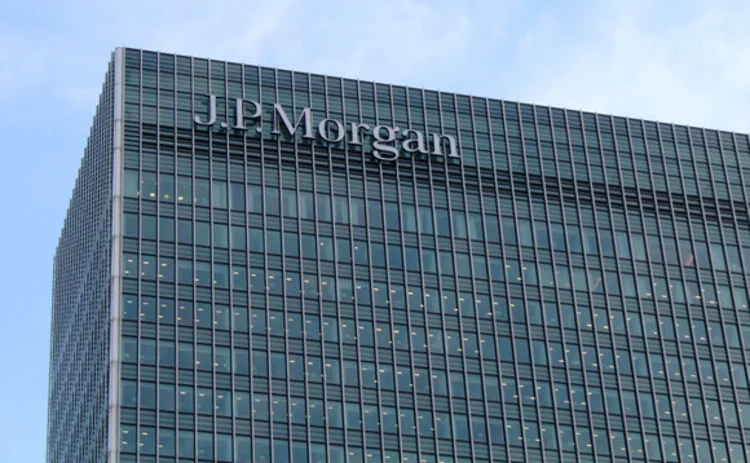
After the brutal reality check of January 2015, market participants realised the effect that big dislocation events can have in an electronic marketplace where the number of risk takers has diminished. Not only did risk management become a top-of-the-list concern, but it was also the seed of change that shaped players' behaviour throughout 2016.
The market became better prepared for unexpected outcomes and moves by learning lessons from the Swiss National Bank event. For market-makers, this meant a full review of how prices are distributed, where they interact with clients and with whom they engage.
An example is JP Morgan, which had a very good year in foreign exchange: according to the bank's third-quarter earnings for 2016, revenues were up 78%, compared with the same period of last year; the figure for the nine months ending September 30 was also 44% higher than in 2015.
The bank came second in the overall rankings at the 2016 FX Week Best Banks Awards and was voted the winner of five prizes (listed at the end of the article), including the coveted Best Bank for e-Trading title.
Anticipating the outcome
On the morning of June 24, the pound dropped 12% against the dollar, as results flowing in from the UK's referendum on its European Union membership indicated a Brexit scenario was likely. While market participants knew the vote was a risk, few anticipated the outcome or magnitude of the currency's move.
This was exactly the type of event for which the SNB event prepared firms. JP Morgan broke several records during the tumultuous night in terms of burst rates, total volumes, the number of clients logging on to its single-dealer platform and the volume of algorithmic orders handled.
"We were among the top liquidity providers on a number of platforms throughout the day," said Richard James, head of FX execution services at JP Morgan, at the time.
The bank supplied prices and liquidity throughout the night without interruption. It had even warned clients in advance to expect a bumpy ride. "There was a lot of work that went into just getting ready and reviewing capacity constraints," Chi Nzelu, global head of automated trading strategies at JP Morgan, told FX Week on June 24.
One of the surprising aspects of 2016 has been the strong performance of single-dealer platforms; venues that only a few years ago were increasingly dismissed in importance due to anticipated regulatory changes.
Despite the rising importance of a number of large non-bank market-makers, the heads of the e-FX business told FX Week in August that JP Morgan does not plan to use third-party liquidity in its internal foreign exchange pool; rather, it intends to rely on the breadth and width of its client franchise to meet customer demand.
Banks are generally looking to show more transparency and consistency in how they operate than ever before, and that's the spirit of why we recently published our last look guidelines
Chi Nzelu, JP Morgan
Transparency has also been a huge driver of behaviour for FX market participants throughout the year. Since late 2015, several banks have published so-called execution policies to formally declare to clients what happens to orders, especially around the use of last look.
JP Morgan published its own execution policy in May, going into an unprecedented level of detail about its parameters for using last look, as well what customers can expect when passing an order for execution.
"Banks are generally looking to show more transparency and consistency in how they operate than ever before, and that's the spirit of why we recently published our last look guidelines. In doing so, while we didn't make any actual changes to our trading policies, we thought it was important to underline that we execute trades as fast as we reasonably can, that we offer symmetric slippage and that we don't engage in practices that disadvantage clients, such as pre-hedging trades or putting additional latency into the process," Nzelu said in an earlier interview with FX Week.
Clients have also changed the way they view liquidity, as transaction cost analysis and best execution are playing an increasing role in their minds. Rather than just looking at prices, customers want to understand fill ratios, round-trip times, the overall quality of the liquidity on which they execute and the service they receive.
"We are there for our clients 24 hours a day and we don't stop providing liquidity during turbulent markets, be it Swiss National Bank-like or indeed Brexit-related, because clients expect consistent provision of liquidity. That has always been a fundamental underlying principle of our franchise and we remain committed to it," James said in August.
Click for editor's introduction, list of interviews and awards tables
Only users who have a paid subscription or are part of a corporate subscription are able to print or copy content.
To access these options, along with all other subscription benefits, please contact info@fx-markets.com or view our subscription options here: https://subscriptions.fx-markets.com
You are currently unable to print this content. Please contact info@fx-markets.com to find out more.
You are currently unable to copy this content. Please contact info@fx-markets.com to find out more.
Copyright Infopro Digital Limited. All rights reserved.
As outlined in our terms and conditions, https://www.infopro-digital.com/terms-and-conditions/subscriptions/ (point 2.4), printing is limited to a single copy.
If you would like to purchase additional rights please email info@fx-markets.com
Copyright Infopro Digital Limited. All rights reserved.
You may share this content using our article tools. As outlined in our terms and conditions, https://www.infopro-digital.com/terms-and-conditions/subscriptions/ (clause 2.4), an Authorised User may only make one copy of the materials for their own personal use. You must also comply with the restrictions in clause 2.5.
If you would like to purchase additional rights please email info@fx-markets.com
More on Awards
Best FX post-trade initiative for Asia: LCH ForexClear
LCH expands FX clearing in Asia, reducing risk, capital pressures and operational complexity through innovative infrastructure

Best FX market data and analytics provider for Asian currencies: SGX FX
SGX’s TickNode has established itself as an institutional-grade market data and analytics offering for Asian FX markets

Overall FX house of the year ASEAN (Malaysia, Indonesia, Philippines, Thailand, Vietnam): MUFG
MUFG’s integrated franchise and its One MUFG philosophy have driven stronger client integration, expanded product coverage and clearer, analytics-led hedging for FX market participants

Best Asia FX spot house: UBS
UBS has strengthened its position in Asian spot markets, including during some of the most testing trading conditions of the past year

Overall FX house of the year: UBS
UBS's single-dealer platform gives clients the confidence to execute large electronic risk transfers during Asia session stress

Best FX single-dealer platform for Asia currencies: UBS
UBS’s NEO platform has become the go-to single-dealer gateway for Asia FX

Best FX liquidity aggregator for Asia currencies: Integral
Integral has closed the liquidity gaps in Asia’s FX and precious metals markets, expanding access to a diverse liquidity network, deploying a patented pricing methodology and growing its regional infrastructure at pace

FX house of the year Australia: Westpac Institutional Bank
Amid elevated volatility, Westpac enables clients to navigate execution and hedging challenges through expanded digital access and risk management innovation